A comedian grabs a paddle while getting laughs, and next to him a parent and child from Inagi keep a rally going. That was the scene on June 29, 2026 at Nomura Real Estate Inagi Arena in Tokyo, where Yoshimoto Kogyo held its event "Yoshimoto Sports Circle: Pickleball for Everyone." Thirty-six people took part, mostly local residents, in pairs of friends and parents with children. They sweated alongside the comedians and went from a rules explanation to match play within 90 minutes. That ability to play a match the same day is exactly the entry point that roots pickleball in a community. For anyone thinking about courts and outreach in Japan, an entertainment event means more than publicity.
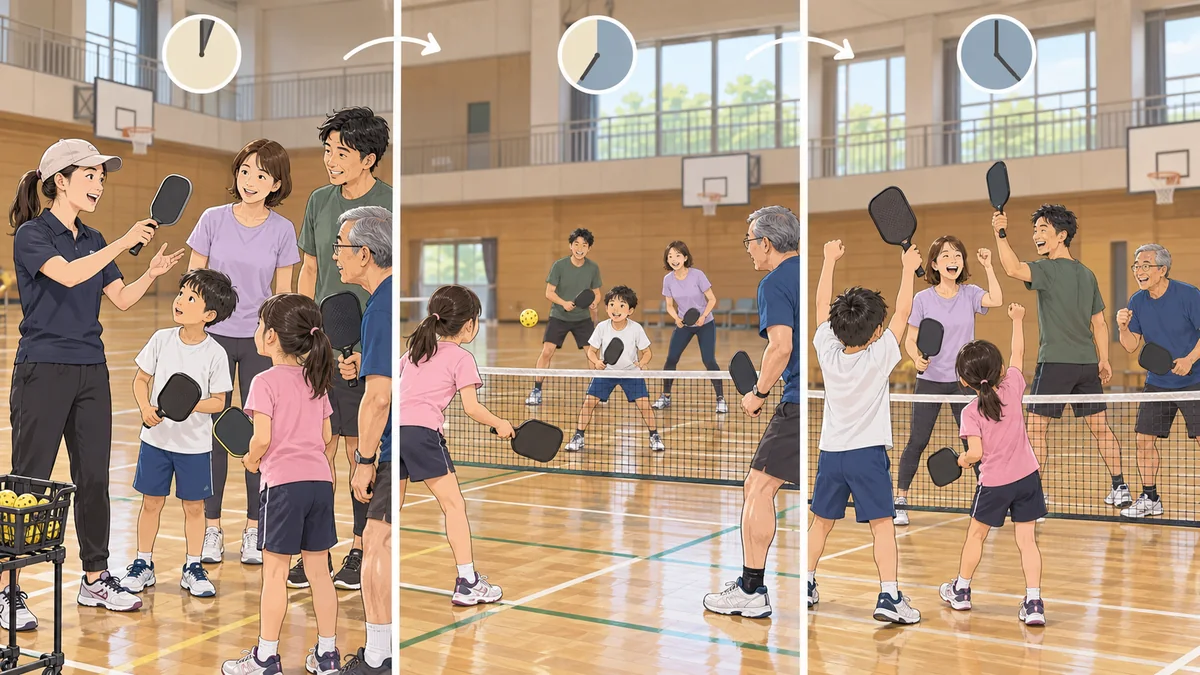
Ninety minutes, 36 people in Inagi, with comedy as the way in
The event was planned by Yoshimoto Kogyo. Comedians including Vamos! Watanabe, Kakeochi (Aoki Macho and Akagi Hosomacho) and Kawanami choy? of Everybody took part, with Vamos serving as instructor. Explaining the basic rules, then practice, then match play took about 90 minutes. Most of the 36 participants were Inagi residents, often coming as pairs of friends or as parent and child. This was not a tournament for experienced players but a session built around people picking up a paddle for the first time.
Pickleball was invented in the United States in 1965 and is played with a perforated plastic ball and a paddle. The court is the same size as a badminton court and the net is lower than in tennis. Because the ball travels slowly, even beginners can sustain a rally. Unlike tennis or badminton, where you need basic drilling before you can hit back and forth, pickleball lets you play something resembling a match the same day you hear the rules. Getting from rules to matches in 90 minutes is possible only because of that.
Why entertainment times local government works
What makes this event interesting is that it was held not at a talent agency studio or a downtown commercial complex but at a public arena in Inagi. The comedians drew the crowd, the municipal facility received them, and residents came. Entertainment, local government and sport, three worlds that rarely meet, overlapped on a single pickleball court.
The biggest barrier to growth is usually how to get people who know about the sport but have never played to take the first step. Reading the rules in a book or watching a video does not move the body. Add a reason like wanting to see a favorite comedian and people with no connection to sport will show up. Comedy works as a lubricant that lowers the psychological hurdle. On television too, with Miyazon fronting a show that covers the sport, the trend ofentertainment using pickleball as an entry pointis spreading. This event brought that trend down into a real, hands-on setting.
Playing a match on day one sets the pace of growth
Alongside the drawing power of celebrity, the speed at which the sport itself gets going matters. The fact that participants reached match play in 90 minutes carries weight for community outreach. Many sports face the problem that people who come to a taster session drop out on difficulty before they get to the fun. Pickleball's first gate is low.
That trait matters most in regions short of coaches and facilities. Without a resident specialist coach, one person who knows the rules is enough to run a taster session. Local governments have already started using that ease as a tool for growth. The town of Sakai in Ibaraki Prefecture, with itsexample of welcoming a pro player through the community revitalization corps, is one of many places where government is leading the effort to root both courts and people in the community. Entertainment events widen interest at the base while local governments prepare somewhere to go next, and when those two stages mesh, growth moves up a gear.
What it takes to make it last
A taster session, though, can easily be a firework. However lively the day is, if there is nowhere nearby to play the following week, the paddle stops there. An entertainment event creates initial interest, not a lasting habit. The two are different things.
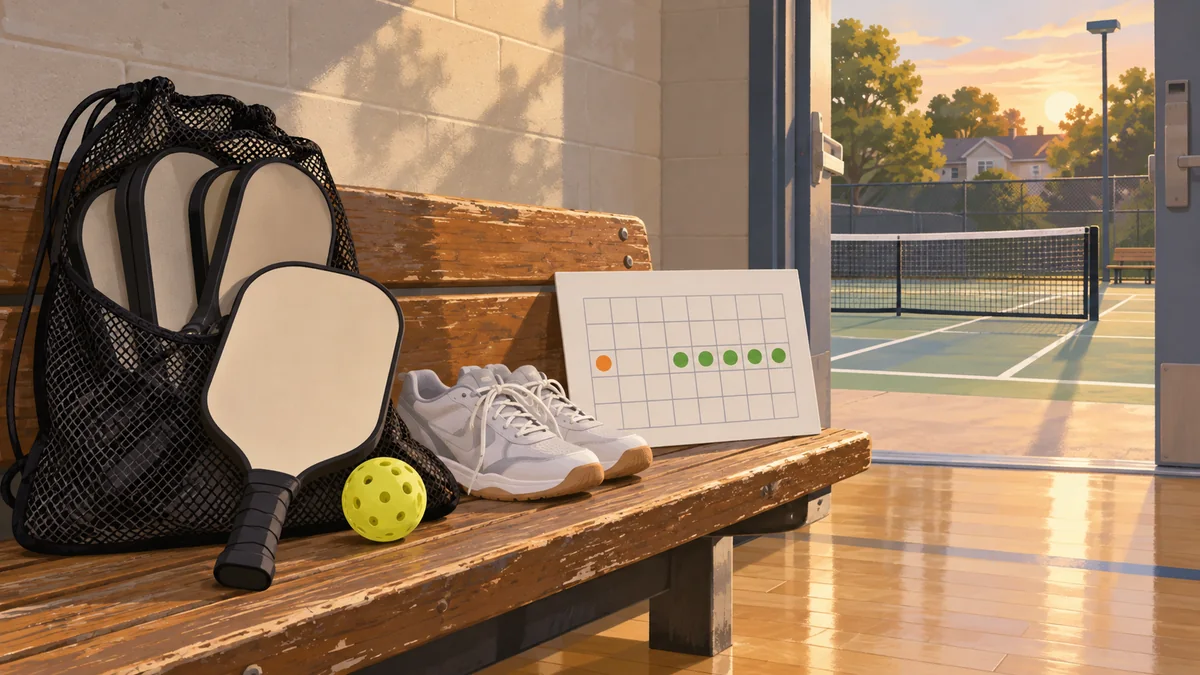
What supports a lasting habit is courts people can use day to day and a setup beginners can join without confusion. The same is true for reaching children: Tokyu Resort'sproject handing paddles to every elementary school in Katsuurashows that putting equipment and places into everyday routines is what brings the sport close to sticking. Whether an organization with reach like Yoshimoto Kogyo stops at a one-off event or connects it to local court building and ongoing programs is the line between a story that fades and a sport that takes root.
What people in Japanese pickleball can take away
There are three takeaways from this event for anyone working to grow pickleball in Japan.
一つ目は、集客の入口を競技外に求める発想だ。競技の魅力を競技の言葉だけで語ると、すでに関心のある層にしか届かない。芸能、テレビ、地域行事といった外部の文脈と組むことで、無関心層のなかに最初の一歩を生める。二つ目は、90分で試合まで届く競技特性を体験設計の中心に据えること。ルール説明を短く切り上げ、早く打たせ、早く試合させる。この構成が「もう一度やりたい」を引き出す。三つ目は、盛り上がりを受け止める受け皿を先に用意しておくことだ。イベント後に通える場所や連絡先を当日その場で示せるかどうかで、翌週の参加につながるかどうかが変わる。
The 90 minutes in Inagi, with comedians and residents laughing together on the same court, was not a flashy tournament or a record attempt. Even so, the way into a sport is often born in exactly this kind of modest, enjoyable setting. The next question is what road gets built beyond that entrance.