フィリピン中部、イロイロ州ティグバウアンの海沿いの町に生まれた新しいピックルボール施設「Centerfield Pickleball」が、2026年7月4日から2日間、80人近くを集めた開業記念トーナメントを開いた。人口6万5千人に満たない地方の町で、コートを建てたその勢いのまま大会を打ってコミュニティを立ち上げる。アフリカでZimbabwe staged back-to-back events in two cities and took root in a blank area for the sport— the same approach overlaps here, and it answers, with one concrete case, the worry of regional operators in Japan that you can build a facility and still get nobody through the door.
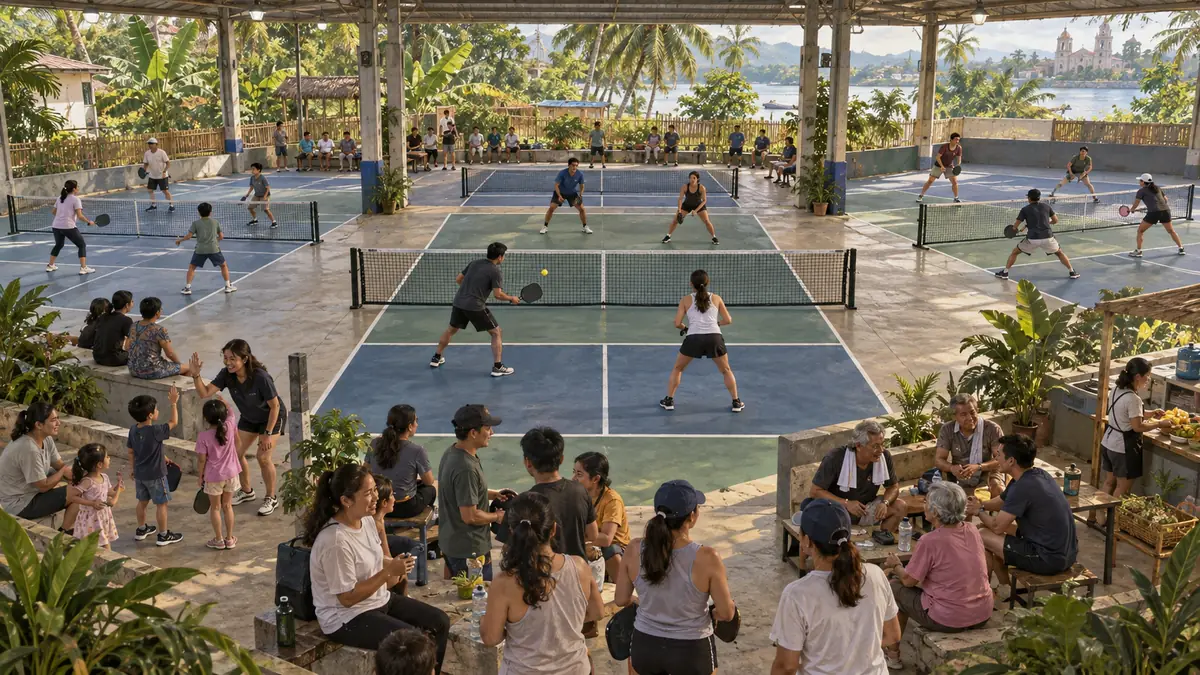
Three months in, 80 players over two days
Centerfield Pickleball sits in the Parara Norte district of Tigbauan, Iloilo. It is a brand-new court in a second-class municipality of some 65,000 people, about 23 km southwest of the provincial capital, Iloilo City. Three months after opening, the facility went straight ahead and organized its own anniversary tournament.
The tournament ran two days from July 4. Close to 80 players entered, split into beginner and advanced categories, with a crossover format between the two from the quarterfinals on. Mixing newcomers and experienced players at the same venue from the start, matching like against like and then letting them collide at the top, made this small regional event one where anyone could enter and still meet the strongest players by winning through.
A family-run court pushing “there is a place for everyone”
What sets the tone here is who is running it. The owners are the couple Binky Pitogo-Torrento and Cy Torrento. Supporting the floor as coaches are Binky's brothers, Bryan and Bib Angelo, both holding PGA-approved Level 1 coaching certification. Courts and coaching handled by relatives — the shape of a small regional business.
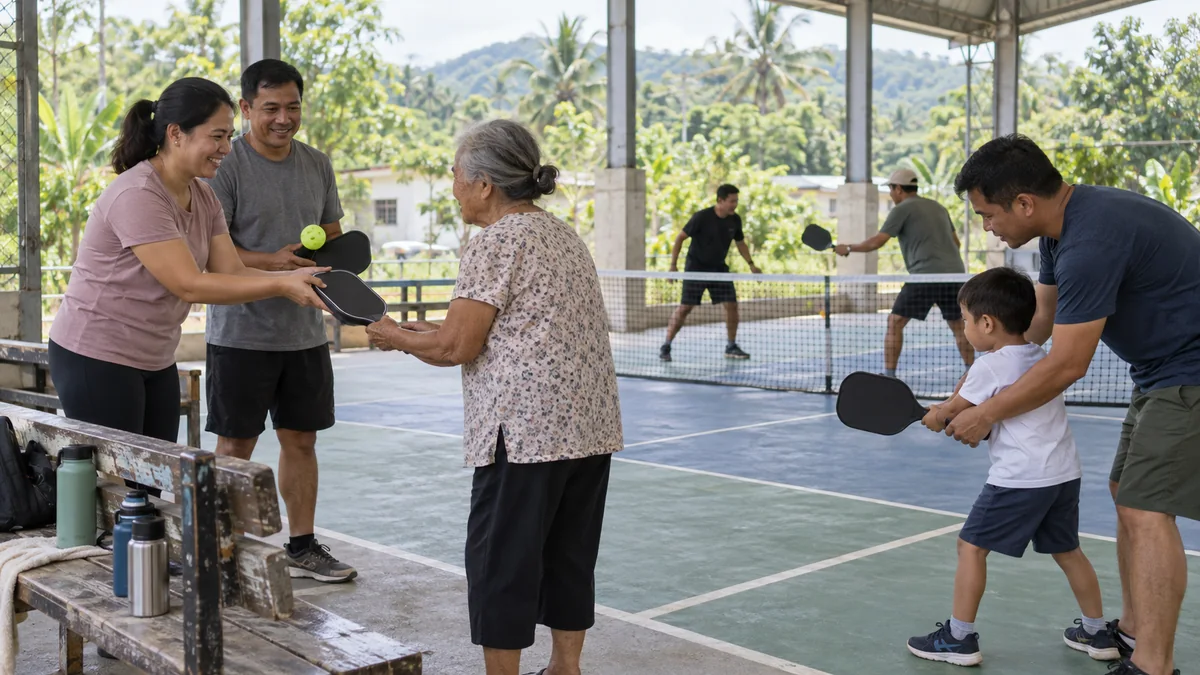
What the team repeats is a single line: at Centerfield there is a place for everyone, whatever their age, skill, gender, or background. The players who actually show up range from children of around five to people in their sixties and older. Standing this up as an open space closer to a town community center than a competitive club is where the aim of this facility shows. Putting a test of skill and an entry point for beginners on the same day, at the anniversary event, follows directly from that thinking.
How fast the Philippines is adopting the sport, in numbers
What happened at one facility in Tigbauan sits at the end of a wave of court building across the Philippines. Here are the national figures alongside those of this regional site.
| Item | Details |
|---|---|
| SM Active Hub courts | 86 nationwide (29 malls, as of May 2026) |
| SM community members | More than 130,000 |
| Tournaments and events across that network | More than 100 to date |
| Time since Centerfield opened | Anniversary tournament held about three months in |
| Anniversary tournament entrants | Close to 80 (beginner and advanced divisions) |
| Population of Tigbauan | About 65,000 (2024) |
While the retail giant SM Group lines up 86 courts across 29 malls nationwide, an independent court stands in a town about 30 minutes by car from the provincial capital and can move 80 people right after opening. The Philippine Pickleball Federation (PPF) has been running a national ranking system since January 2026, and the commercial facilities in the cities and the grassroots in the regions are starting to mesh, top and bottom.
The words left on the court
Gather the words and the results around the tournament and it reads as a place that values breadth of participation over competitive results.
- The organizers — “Age, skill, gender, background: none of it matters. At Centerfield there is a place for everyone,” a stance they state repeatedly
- The beginner division was won by the pair of Vince Lonie Orquinaza and Arne Jane Calfoforo. Even the beginners' bracket had a proper doubles title on offer
- The advanced division went to Janrei Alido and Joshua Ryan Traviña, keeping a bracket where experienced players could compete in earnest running alongside
With the coaching brothers holding certification as well, this is a place to play that has not given up on winning and losing or on the quality of teaching. That is what sets it apart from a plain taster session.
Three things regional facilities in Japan can learn
For operators in Japan wrestling with a court shortage while looking for ways to spread the sport outside the cities, this small case in Iloilo holds three things worth noting.
First,The speed of standing up a community by pairing the opening with an immediate tournament. In Japan, a new court tends to start with individual play and taster sessions, with tournaments waiting until members have grown into them. Centerfield did the reverse: it held a tournament three months after opening and, over those two days, collected 80 names and contacts and, with them, the motivation to come back. In Southeast Asia,Vietnam's development-league design that lifts beginners to a national final in nine monthsis another case of deliberately connecting the entry point to competition early. Putting a tournament up front as a device for drawing people, rather than as a reward, is something new facilities in Japan can copy directly.
Second,Proof that grassroots play works even in a town of under 70,000. Regional facilities in Japan tend to stall on “the base population simply is not there,” but Tigbauan, close to the provincial capital though it is, is a regional town. That an independent court there pulled off a two-division tournament in its early months shows that a small catchment cannot be the excuse. In Shikoku, too,a 24-hour gym in Matsuyama opened dedicated courts and became a new hub, so the vessels are coming together in regional Japan as well. What is missing is not the box but the hook that pulls people in on day one.
Third,Family management and split skill levels together. A couple running the place with certified coaches from the same family teaching is exactly the regional model that works with few people. On top of that, they split beginner and experienced divisions and had them cross at the quarterfinals. Maximizing the entry point while keeping competition intact is a two-stage setup that regional operators in Japan running facilities with small teams can use directly as a design reference.
Facility and tournament basics
| Item | Details |
|---|---|
| Facility Name | Centerfield Pickleball |
| Location | Parara Norte district, Tigbauan, Iloilo, Philippines |
| Location | A seaside town about 23 km southwest of the provincial capital, Iloilo City |
| Operator | The couple Binky Pitogo-Torrento and Cy Torrento; coaching by the Pitogo brothers (certified) |
| Anniversary tournament | Two days from July 4, 2026, with close to 80 entrants |
| Division | Beginner / Advanced (crossover from the quarterfinals) |
Summary — can you prepare the day-one hook rather than just the box
What Tigbauan drives home is that the design of operations — how you pull people in on opening day — matters more than the box of a court itself. A family-run court in a town of under 70,000 moved 80 people three months after opening and ran beginners and experienced players at the same venue. Three things regional operators in Japan should check next. Whether a new court can put a taster session and a small tournament on the same day. Whether a proper beginner division can be laid on so newcomers get the joy of winning and losing. And whether certified coaching can be in place even with a small team. When you see news that a new court is going up in your area, look first at what is planned for opening day. The speed of adoption shows in that day's design more than in the number of boxes.