タレントの優木まおみさんが、46歳でピックルボールの大会出場を目指している。女性誌LEEのインタビュー(2026年9月6日配信)で語ったもので、生活の拠点をマレーシアへ移した先で握ったパドルに、遊びの域を超えてのめり込んでいる。この話を有名人の趣味として片づけるのは惜しい。40代半ばから競技に向き合う姿は、同じ年代で「今から始めても遅いのでは」と迷う人にとって、具体的な判断材料になるからだ。
この記事で押さえたい点
- 優木さんは趣味として始めた後、大会出場を目標にするまで熱中した。
- 本人が語る魅力の入口は、パドルでボールを打ったときの音と爽快感だった。
- 個人の挑戦だけでなく、日本で競技人口と施設が増えることにも目を向けている。
The LEE interview where she said she is aiming to compete at 46
Yuki was born in Saga Prefecture in 1980. A mother of two, she moved to Malaysia in 2025 with her two daughters and has written about life there in a series for LEEweb. Her husband stayed in Japan, and they chose a two-base life built around education. Her absorption in pickleball came up as an extension of that series.
Her own words are not modest. What began as a hobby has turned, somewhere along the way, into a goal of entering tournaments. "I got so hooked that I started seriously aiming to compete." The heart of the story is that she puts 46 on the side of the fact that she started, not on the side of reasons not to.
The paddle she picked up in Malaysia, and a sound she cannot forget
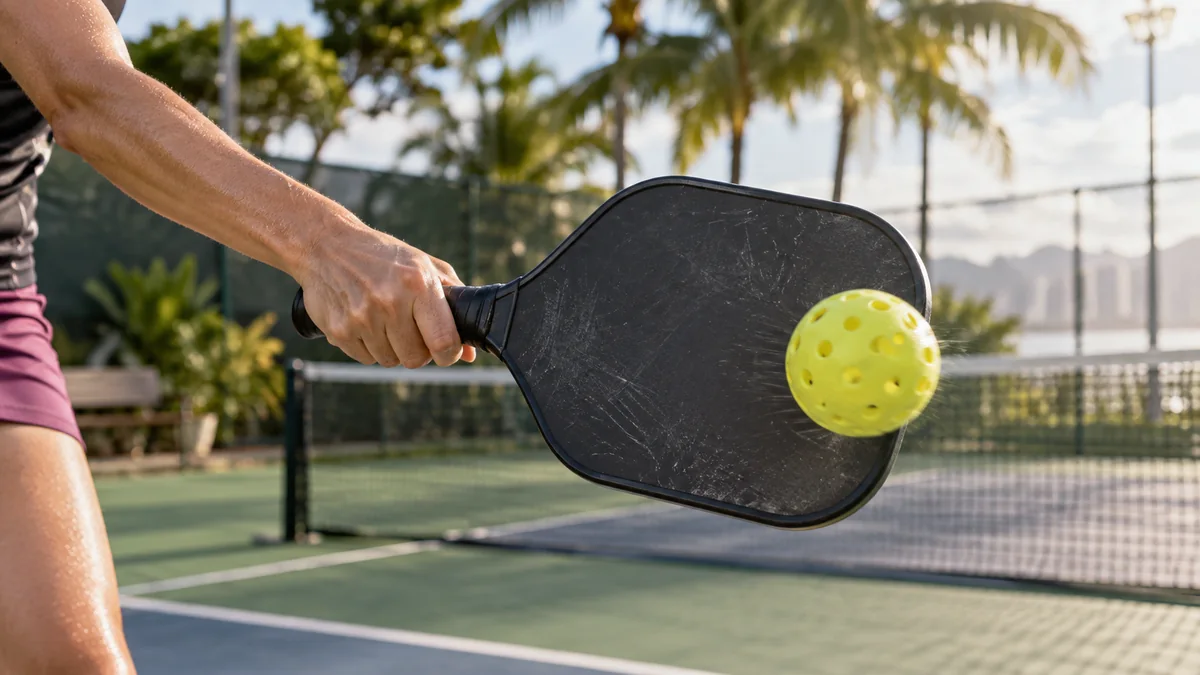
The way in was the sound. "I was taken by how satisfying it feels to hit the ball with a paddle. It makes this great bakoon! sound." She explains the feel of striking a perforated plastic ball with a paddle by comparing it to a hagoita, the Japanese battledore. The sport came out of the US and mixes elements of tennis, table tennis and badminton, but the gear is light and the court small, and the ball comes back from the first day you hold a paddle. That first response called for the next one.
"I started thinking, I want to hit again, I want that feeling one more time," Yuki says, looking back at how she fell into it. The body moves before the rules make sense. That ease of entry gives adults who have drifted away from exercise a foothold back onto a court.
Playing "eight days a week" and getting lean
The intensity shows in how much she practices. "Apart from days and hours when work or the kids make it impossible, it's all pickleball!" She describes her frequency as "eight days a week." A phrase that runs past the number of days in a week presumably means there are days she is on court twice, morning and evening.
The physical change is specific too. "Since I started pickleball my weight has dropped a lot. My body has firmed up." She did not start in order to lose weight; the result followed from repeating the movement of hitting back. Changing direction side to side, stepping in and dropping back, fine placement at the net. That repetition of stopping and starting over short distances works on the body as exercise in midlife.
Tournaments now, and the national team in view
Her goal goes beyond improving at a hobby. Yuki talks about entering tournaments and, beyond that, uses the words national team. There is a push to have pickleball adopted at the 2032 Brisbane Olympics, and the competitive structure of the sport is not yet settled. Turn that around and it means someone starting now is in the rare position of realistically chasing a national team place.
Aiming for a national team from 46 would not hold up in most other sports. Precisely because the player base is thin and the top tier has not hardened, a gap is open for late challengers. Yuki's declaration puts that gap into words.
More women in their 40s and 50s are showing up on court
Her enthusiasm does not stop with her. Pickleball involves little running, and the load on knees and hips is lighter than in tennis. Paddles and balls are light, and differences in height or arm strength do not decide the score on their own. That design is drawing in women in their 40s and 50s who found it hard to start exercising again.
You can work up a sweat in a short window between childcare and work. You can rally in doubles with anyone. The "it's just plain fun" that Yuki describes shows that the joy of moving comes before winning or losing. The door to the sport is not closed by whether you played sports before.
Precedents for switching sports in midlife and still winning
Japanese players have already shown that entering later in life can produce results. Rika Fujiwara, a former All Japan tennis champion, switched to pickleball at 44 and has reached finals at home and abroad. At the Tokyo Open she took seven straight points from 5-10 down to win gold, and at an international event in Shenzhen she finished second in the women's final.Rika Fujiwara's comeback at 44 at the Tokyo Openis proof that switchers in their 40s can compete at the top.
The feel for the ball and the reading of a court built up in racket sports carry straight over to a paddle. What Yuki picked up is an implement that sits on the same line as tennis, so past athletic experience does not go to waste. A restart in midlife is not a delay but a thawing of what was already stored.
The room among tennis players, and Japan's player numbers
There is plenty of room in the base numbers as well. Domestic estimates put more than 70% of people with tennis experience as interested in pickleball, while the actual player count is still small against the size of the market.72.5% of tennis players are interested, and a 330,000-player market has 36 times that in headroom: those figures suggest that a switch like Yuki's is not an exception but the front of a wave still to come.
Yuki devotes words to how the sport is spreading in Japan. "If the player base grows and more facilities open, it will become familiar enough in Japan that people think, I have a bit of time, let's play pickleball." Someone who caught fire overseas is thinking about the base back home. That view hits the real problem in Japan, where the shortage of venues is the biggest wall.
An entry point that players of the same generation can step through
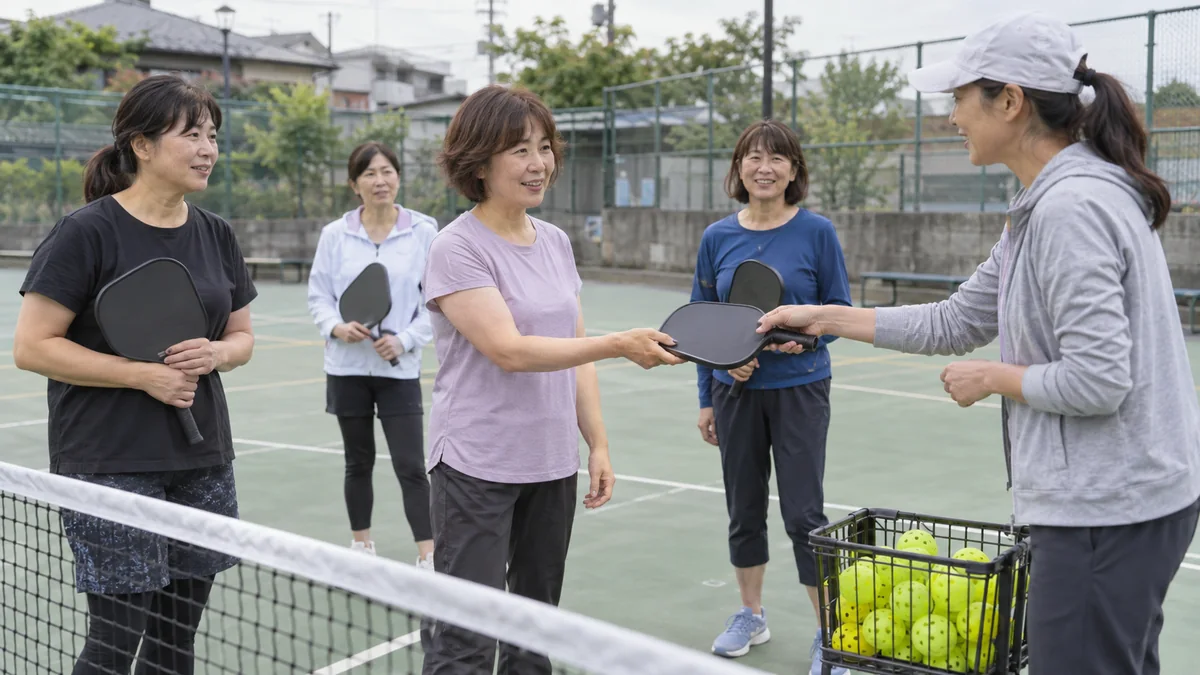
Yuki's story is not a distant celebrity's tale of glory but a push toward a step within reach. What it takes to start is not a reserve of fitness or youth but one chance to hold a paddle. Free permanent courts provided by local governments and taster sessions for beginners are increasing around the country, and places where you can play empty-handed are spreading.Chigasaki set up free courts that need no reservation, and moves like it show local governments starting to build entry points too.
The more someone in their 40s or 50s has been away from exercise, the more that first solid hit tends to stay with them. The sound Yuki wrote as "bakoon" is something people of the same age can feel in their own palm on court. Refusing to make age the reason to start is, in itself, a signal to the next person who picks up a paddle.
The shape of demand that operators can read
Seen from the operator's side, Yuki's absorption traces the shape of demand. Middle-aged players who come eight days a week are customers who fill weekday daytime hours, and they overlap with the group tennis schools have been missing. Because the load on the knees is light and play can continue for years, churn is easier to hold down. Exercise that satisfies in a short session also fits demand around childcare and small gaps in the day.
有名人の発信が競技を知る入口になる局面で、施設側に問われるのは受け皿の準備だ。初めて握る大人が二度目も来やすい導線、道具を借りられる仕組み、経験の有無で気後れしない場づくりが欠かせない。優木さんが語った「身近なスポーツ」へ近づくには、コートの数だけでなく、最初の一歩を受け止める運営が必要になる。46歳から大会を目指すという宣言は、同世代の挑戦と施設側の課題を同時に見せている。
Sources
LEE, "We asked Maomi Yuki, who is aiming to compete from age 46: what makes the much-talked-about pickleball so appealing?"
LEE series, "Maomi Yuki: life in Malaysia, the margins of a life"
Sankei Sports, "Maomi Yuki falls for pickleball, a strong future Olympic candidate: 'It's like a hagoita.' She also wants to spread it in Japan"
AERA DIGITAL, "Maomi Yuki, 10 months into an education move to Malaysia with her two daughters"