2026年7月11日、米アラバマ州の人口約7万2,000人の都市ドーサンが、640万ドル(約9.9億円/1ドル=155円換算)を投じた屋根付き25面のピックルボール複合施設を開業しました。運営は民間チェーンではなく市の直営。開業初日には250人超のプレーヤーが集まり、一部は150マイル(約240km)以上を移動して駆けつけています。地方都市が税金でこれだけの規模のコートを持つ狙いは、競技振興だけでなく「集客と税収」、さらに市が掲げる住民の健康・生活の質にまでまたがっています。同じ施設を公共インフラの視点から扱ったWhat it means for a regional city of 70,000 to fund 25 covered courts with tax money; here we dig into it from the angle of sports tourism as economic design. Municipalities in Japan are moving to build courts in a number of places, and Dothan's bet holds plenty worth thinking about.
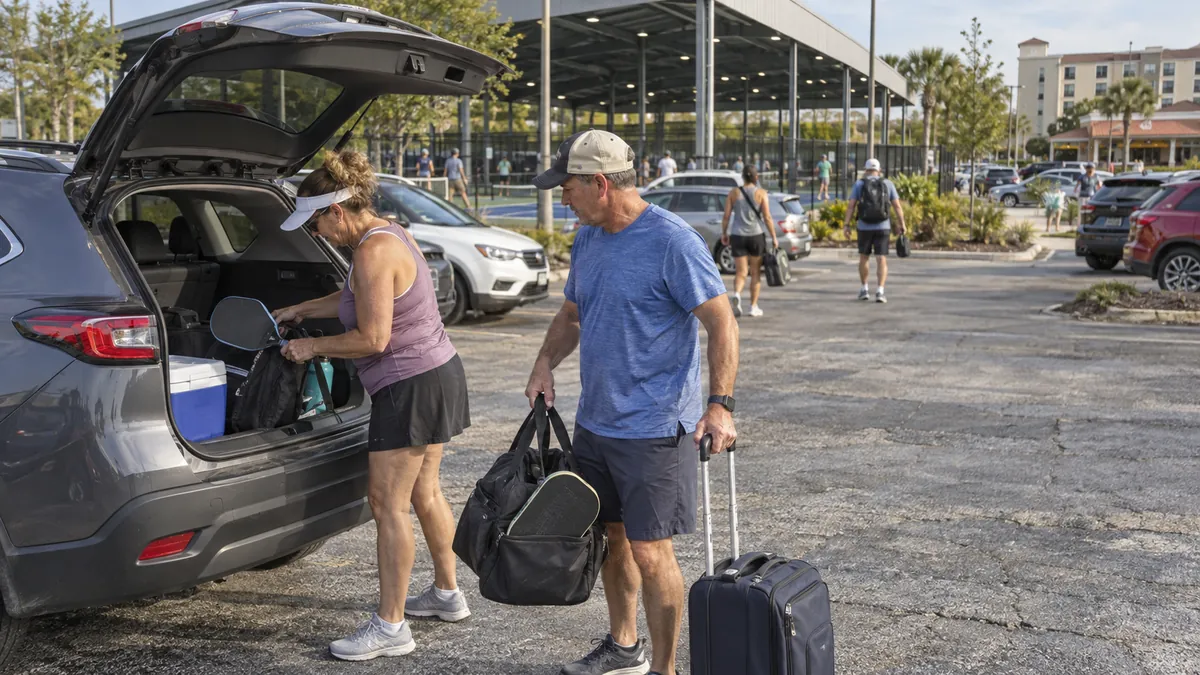
25 covered courts rose on the site of old tennis courts
The new facility sits in one corner of the city's Rip Hewes Athletic Complex, on the site of tennis courts that had aged out of use. All 25 courts have roofs and ceiling fans, with one dedicated championship court. The city says its indirect LED lighting for championship-level play is “the first of its kind,” and the site meets ADA accessibility standards.
Being under a roof matters for a regional facility. It keeps play out of the direct summer sun and sudden rain of south Alabama and allows year-round use. Opening day paired free play with clinics, vendor booths, food trucks, and a one-day tournament run with the local Southern Pickleball. It was designed from day one not as a ribbon-cutting for courts but as a place where people come, stay, and spend.
The city framed its aim as health and becoming a destination
The words of city officials make it clear that this investment is part of a tourism strategy.
- ビリー・パウエル氏(レジャーサービス局長)——「これは単なるプロジェクトではない。健康、コミュニティ、生活の質への長期投資だ」
- Hannah Shiver, Executive Director of Visit Dothan — “Seeing how fast pickleball was growing, we believed Dothan could become a destination for the sport.”
- More than 250 people came on opening day, some travelling over 150 miles — proof of inflow from outside the city and the state on day one
That the executive director of the tourism bureau, Visit Dothan, is waving the flag should not be missed. Building the facility was not left to the public works and sports departments alone; the DMO, whose job is bringing people in, was involved from the start. The setup assumes not just building it but filling it.
The payback design in numbers
Dothan can justify this scale on the back of the city's record in sports tourism overall. The city drew more than 50 sporting events last year, with a reported direct economic impact of about $19.9 million. The new pickleball facility is positioned to stack on top of that existing earner.
| Item | Figure |
|---|---|
| Number of courts | 25 courts (all covered) |
| Project cost | $6.4 million (about ¥990 million at ¥155 to the dollar) |
| Opening date | July 11, 2026 |
| Opening-day attendance | More than 250 (the furthest travelled over 150 miles) |
| Population of Dothan | About 72,000 (71,110 in the 2020 census) |
| Annual economic impact of the city's sports tourism | About $19.9 million (more than 50 events drawn) |
| Projected annual economic impact of the new facility | On the order of $2 million to $4 million a year (the range depends on the estimate) |
Against the $6.4 million upfront, reported estimates of the annual economic impact the facility generates range from over $2 million to over $4 million. That $2 million to $4 million, though, is the ripple effect across the whole area, not money the city recovers directly on its investment. Only part of it returns as municipal revenue, so it cannot be reduced to “payback in X years.” Municipally led dedicated complexes are going up across the United States; the city of Rocklin, California, for instance, hasbroken ground on a 16-court dedicated pickleball facility costing $2.9 million in total. Compare the investment per court and it becomes clear how bold Dothan's 25 covered courts are.
How the city handled the “tax money for a leisure facility” objection
A town of 70,000 putting close to ¥1 billion of public money into a leisure facility inevitably draws the question of whether that is a sound use of taxes. Dothan cleared it for three reasons.
First,It held costs down by converting an idle asset. The city did not acquire land from scratch; it resurfaced tennis courts that had fallen out of use. Reusing existing infrastructure makes accountability to residents easier to meet.
Second,It tied the project to health and quality of life as public goods. As the director stated plainly with “a long-term investment in health,” the city positioned this not as a mere sports venue but as a welfare facility for residents. Pickleball, playable at any age, fits the explanation a public facility has to give.
Third,It had a story about earning outside money through tourism. Draw people from outside the city and the state, and they leave money at local hotels, restaurants, and shops. The opening-day result — 250 people, some from 150 miles away — became the first data point showing that story is not wishful thinking.
What Japanese municipalities can take from this
More local governments in Japan are moving into pickleball. Dothan's case offers three practical lessons.
One is thatKilling weather risk with roofs and year-round operation. Public courts in Japan are mostly outdoors, and use drops through the rainy season, the summer heat, and snow. If drawing visitors is the pillar of payback, a covered structure that secures operating days decides the return. As in Chigasaki, Kanagawa, where the citybuilt a pickleball area within the same city-park framework used for skateboarding, using the framework of existing public space makes development possible while sidestepping the wall of land acquisition.
The other is thatConverting idle sports facilities. Japan has no shortage of public tennis courts and parts of gymnasiums whose use has fallen off. Just as Dothan resurfaced its old tennis courts, reusing existing assets lowers the bar on both cost and consensus.
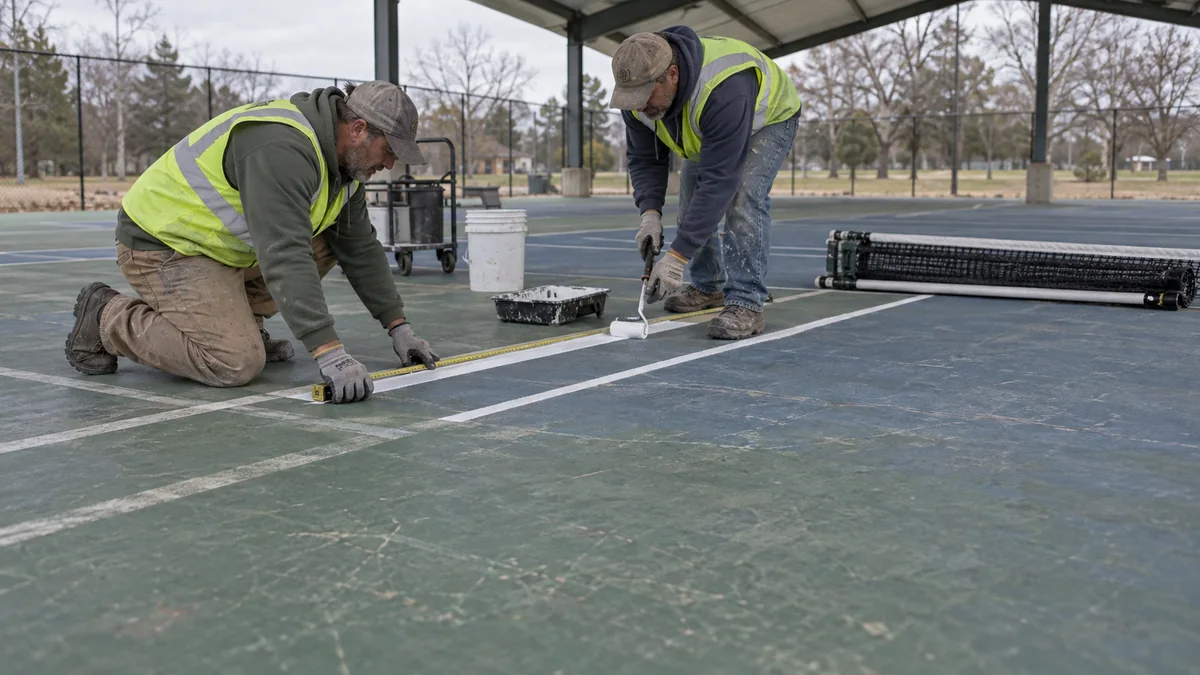
Finally,working with the tourism department. In Japanese municipalities, construction and sports promotion staff tend to push the build through while attracting visitors comes as an afterthought. Bring the DMO or tourism association in at the planning stage the way Dothan did, and write tournament bids and the spillover into lodging and dining into the design from the start, and you avoid the failure of building something nobody comes to.
Facility and city basics
| Item | Details |
|---|---|
| Name and location | Inside the Rip Hewes Athletic Complex (Dothan, Alabama, USA) |
| Scale | 25 covered courts / 1 dedicated championship court / ceiling fans, indirect LED lighting, ADA compliant |
| Operating Body | City of Dothan (run directly by the Leisure Services Department) |
| Opening event | Free play, clinics, vendor booths, food trucks, and a one-day tournament co-hosted with Southern Pickleball |
| For reference: statewide sports tourism impact | More than $614 million in 2024 (State of Alabama) |
Summary — courts have become a device that draws spending
Dothan's 25 courts are one example of pickleball moving past sport and into regional economic infrastructure. A town of 70,000 put about ¥990 million of public money in and proved inflow of 250 people from a 150-mile radius on day one. For Japanese local governments chasing tax revenue and visitor numbers, that structure is directly worth studying. Three things to follow. First, whether the facility actually hits the projected annual economic impact. Second, whether it can put together tournament operations that keep drawing people from outside the city and the prefecture. Third, how to reproduce covered construction and tourism coordination in Japan's climate and inside the silos of local government. It starts with checking whether your own municipality has an idle sports facility that could be converted.