In This Article
- The features of the three core materials: polymer, Nomex, and aluminum
- Differences in feel, control, and durability
- Recommended core materials by play style
"When I tried to choose a paddle, the spec sheet said 'polymer core,' 'Nomex,' and 'aluminum,' and I had no idea which was good..."
I understand that confusion. Many people hit the same wall in choosing a paddle when they'd just started pickleball.
In fact, this difference in core material governs almost everything about feel, control, and power. The carbon or fiberglass on the surface matters too, butit's the core inside that decides a paddle's character.
We've organized the three core materials by play style, so read to the end and you're sure to find the paddle that suits you.
What is a paddle's core? Let's grasp this first
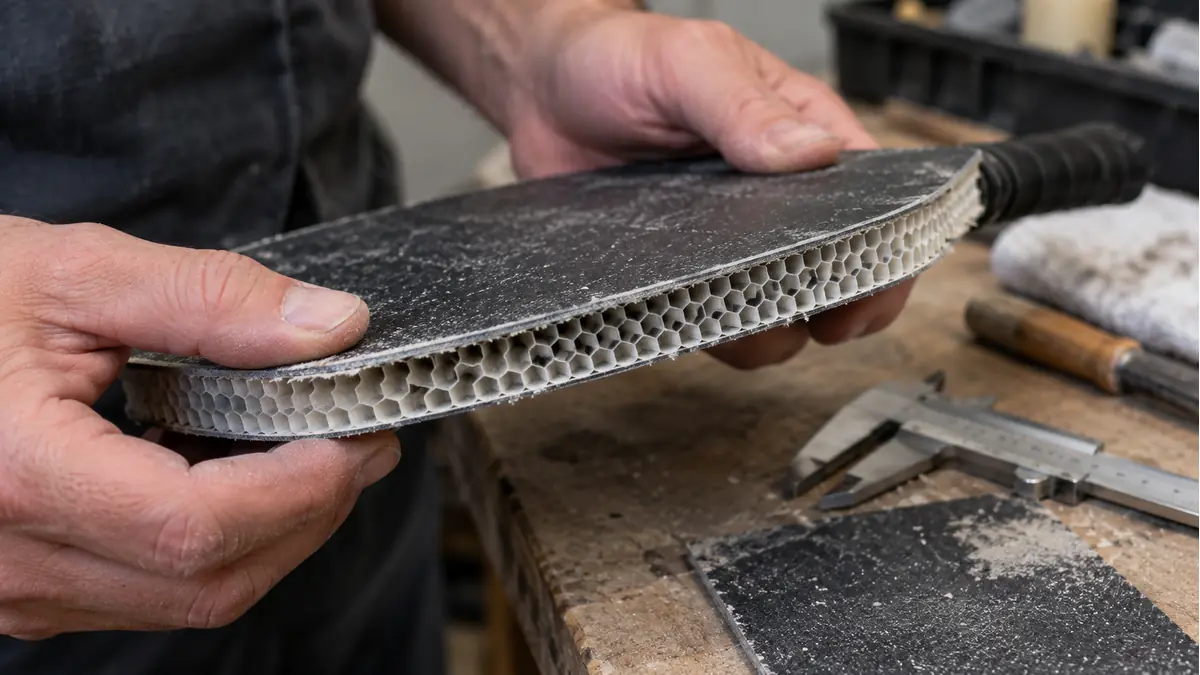
A pickleball paddle is made with a two-layer structure of a surface material (face) and an internal core. The core is, so to speak, the paddle's "internal organs," and the rebound, absorption, and loudness at impact are all decided here.
The core structure: honeycomb is the basis
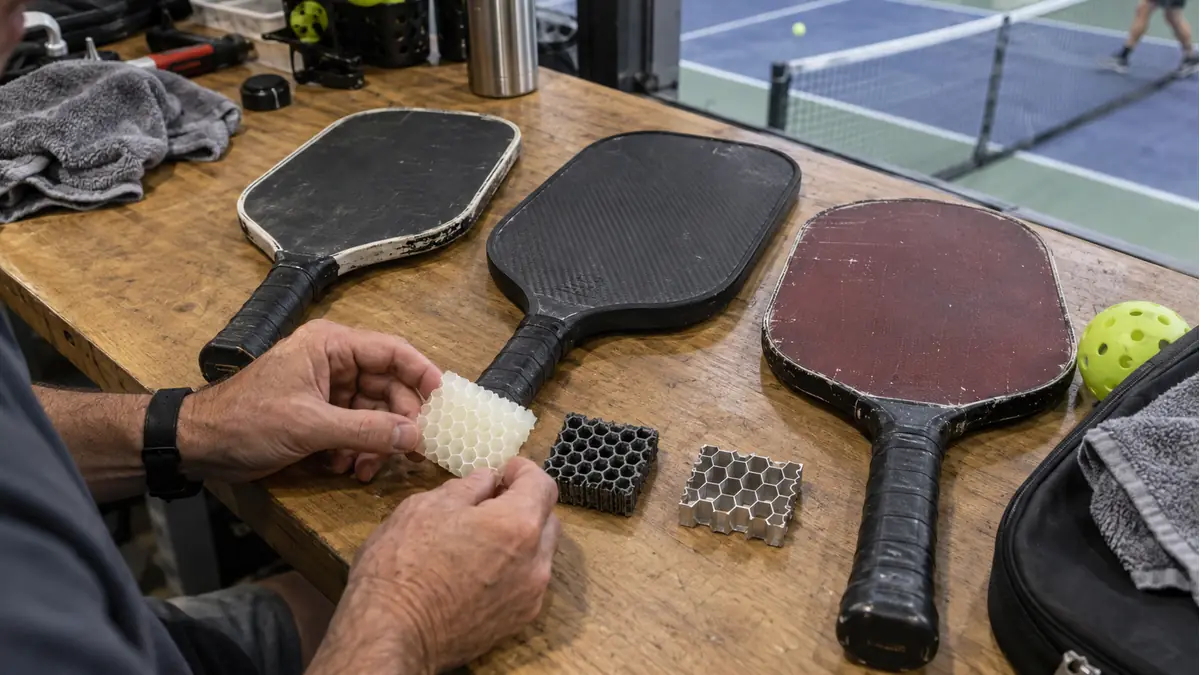
The core of most paddles has a hexagonal honeycomb structure. Thanks to this shape, they achieve both lightness and strength at the same time.
The materials that make up that honeycomb are the three types—polymer, Nomex, and aluminum. They each differ in density, hardness, and weight, and the feel when you hit is completely different.
The core thickness also affects the feel
The core thickness is generally designed in therange of 13 mm to 16 mm. The thicker it is, the wider the sweet spot and the easier to control; the thinner it is, the stronger the rebound and the easier to produce power. Keeping this relationship in mind makes reading spec sheets much easier.
The features of the polymer core | The current mainstream material
Of the paddles on the market,about 80% have a polymer core. There's a solid reason it's so widely supported.
Feel and control
The biggest feature of the polymer core is its soft, moist feel. The moment the ball makes contact, there's a sensation of the core sinking in slightly before popping it back. This "hold" directly ties into ease of control, and the difference is noticeable enough that you feel "oh, this is completely different" the first time you use it.
Something often overlooked is the quietness of the impact sound. When playing at courts near community centers or residential areas, being considerate of your surroundings is easier—a merit unique to the polymer core.
The polymer core suits people like this
- Those who want to enjoy rallies with a focus on control
- Beginners who have just started pickleball
- Those mainly playing as a hobby two to three times a week
In a word, it's "the material with the best overall balance". If you're unsure, choosing a polymer core first won't steer you wrong.
The features of the Nomex core | For players seeking power
Nomex is a material originally used in the aerospace industry and in firefighting gear—a high-density meta-aramid fiber developed by DuPont. It's so high in heat resistance and strength that it's used in military protective gear and aircraft interiors, and this hardness generates strong rebound in a paddle.
Power and rebound
When you hit with a Nomex-core paddle, there's a hard, snappy feel. The rebound is strong, so even at the same swing speed, the ball clearly flies out faster than with polymer.
The impact sound is also quite loud. Whether you find this "satisfying" or "noisy" depends on the person, but competition-minded players tend to like this sound.
The Nomex core suits people like this
- Those who want to make power shots their weapon
- Those aiming to play at a competitive level
- Those who like the impact sound and get pumped up by it
Since the strong rebound makes control somewhat harder, it's recommended for intermediate players and above who have gotten used to rallying to a degree.
The features of the aluminum core | A staple material common in entry models
The aluminum core is a core made of an aluminum honeycomb structure. Because it's metal, it's durable and low in manufacturing cost, soit's often used in entry-level paddles priced around 2,000 to 5,000 yen。
Feel and weight
The hardness is roughly between polymer and Nomex, and the feel is on the harder side. However, since it's metal, the weight tends to increase, so keep in mind that you may tire more easily during long play. Its control performance doesn't match polymer, and its rebound isn't as much as Nomex, so it's a material sometimes called "in-between."
The aluminum core suits people like this
- Those who just want to get their first paddle as cheaply as possible
- Those who want to try it first and buy something better later
- Those wanting an easy gift for a child or family member
If you accept it as an entry-level option, it's plenty usable. Once you get used to play, consider stepping up to a polymer core.
A thorough comparison of the three core materials
Organizing everything so far, the differences among the three materials are as follows.
| Item | Polymer core | Nomex core | Aluminum core |
|---|---|---|---|
| Feel | Soft | Hard | In-between |
| Control | ◎ High | △ Somewhat low | 〇 Average |
| Power / rebound | 〇 Average | ◎ High | 〇 Average |
| Quietness | ◎ Quiet | △ Loud | 〇 Average |
| Durability | 〇 Good | ◎ Highly durable | 〇 Good |
| Price range | Medium to high | High | Low to medium |
| Suited level | Beginner to advanced | Intermediate to advanced | Beginner |
You can see at a glance that the polymer core is well balanced overall and can handle players of any level. Just remember that Nomex is for the competition-minded who pursue power, and aluminum is for those who simply want to start cheaply.
By play style! Which core material suits you?
| Play style | Recommended core | Reason |
|---|---|---|
| Control-focused rally type | Polymer | Soft feel makes it easy to control |
| Frequent power shots | Nomex | Strong rebound makes the ball fly fast |
| Playing in quiet environments | Polymer | Quiet impact sound, considerate of surroundings |
| Wanting a first paddle cheaply | Aluminum | Cheap and hard to break |
| Hobby play once a week or less | Polymer or aluminum | Fine to choose by value for money |
| Aiming for competitive tournaments | Polymer or Nomex | Use as appropriate to your level |
One thing to watch out for is the pattern of choosing Nomex just because "a pro uses it." The rebound may be too strong, making your rallies unstable. The iron rule is to choose your core material to match your level.
Summary
Here's a summary of the differences among the three types of pickleball paddle core material.
- Polymer corePolymer: characterized by a soft feel, high control, and quietness. It handles all levels and is the mainstream material, accounting for about 80% of the market
- Nomex coreNomex: hard feel, high rebound, power-focused. For competition-minded intermediate to advanced players
- Aluminum coreAluminum: cheap and ideal for entry level. Control and power are in-between
If you're unsure, the polymer core is the only choice. Its biggest strength is that it's easy to control and fits any play style easily.
If you're intermediate or above and want to pursue power, taking on Nomex is interesting too. Choosing a paddle with an understanding of the core material lets you really feel your play level up.
FAQ
Q1: Which is for the more skilled player, the polymer core or the Nomex core?
A1: The polymer core suits beginners to intermediates, and the Nomex core suits competition-minded intermediate to advanced players. The polymer core is easy to control, while Nomex has high rebound and requires a degree of technique.
Q2: Do aluminum-core paddles break quickly?
A2: Since aluminum is metal, the frame is sturdy, but the honeycomb structure is also prone to dents and deformation. It has enough durability for normal use and can be used without issue as an entry model.
Q3: What changes so much when the core material changes?
A3: The feel, control, power, and loudness all change. Even with the same swing, the difference is big enough that the way the ball flies and the vibration in your hand feel completely different depending on the core.
Q4: Do higher-priced paddles use a better core?
A4: Not necessarily. Expensive paddles often have higher-quality surface material (carbon or fiberglass quality) and manufacturing precision, and the price isn't decided by the core material alone. There are plenty of expensive paddles with a polymer core too.
Q5: Where on the paddle can I tell the core material?
A5: The packaging or the maker's product page will have descriptions like "polymer core" or "Nomex honeycomb core." If there's no description, contacting customer support will get you the answer.
Q6: What is a standard core thickness?
A6: Generally, 13 mm to 16 mm is mainstream. A thick 16 mm core is control-focused, while 13 mm is said to have high rebound and produce power easily. If you're unsure, choosing 16 mm is easy to use.
Related Articles Worth Reading
- The Complete Guide to Pickleball Skill Ratings (2.0–5.0) | Know Your Level
- Are There Pickleball Tournaments Beginners Can Enter? How to Join and the Right Mindset
- Pickleball and Mental Health | Why It Works for Stress Relief and Preventing Depression
- A Stretching Routine Before and After Pickleball | Care to Enjoy It Injury-Free for Years
- Elbow Injuries Common in Pickleball | Preventing Tennis Elbow and Self-Care Methods
Reference Links
Related Articles