"How to choose a pickleball bag | A comparison of three types and five points"
"I started pickleball, but how am I supposed to carry my paddle?"
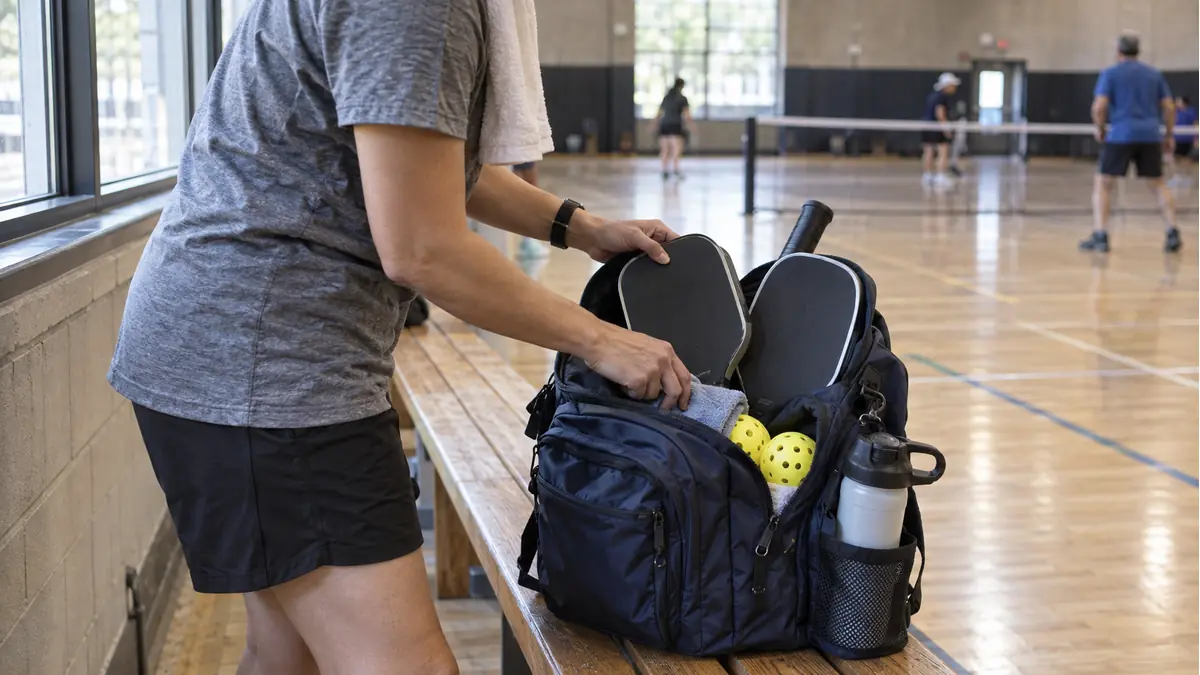
Quite a few people started looking for a bag while thinking exactly that, didn't they? Even though a paddle is smaller than a tennis racket, without a dedicated case it scratches easily. Toss it in with the balls and it's bulky. Before you know it, you realize "a regular backpack won't cut it."
In this article, we thoroughly compare pickleball bagsby dividing them into three types. We've organized it practically so that everyone from beginners to intermediates to those who've started entering tournaments can find the one that's just right for them.
In This Article
- The differences and features of the three types of pickleball bags
- Five checkpoints for choosing without failing
- Recommended ways to choose for beginners, intermediates, and tournament participants
Why do you need a dedicated pickleball bag?
"Isn't a regular sports bag fine?"—we hear that a lot. Honestly, at first you can make do with a backpack. But as you keep at it, three frustrations emerge.
The first is the paddle storage problem.
Many pickleball paddles are about 38–43 cm long, so they don't fit in a regular bag, or you force them in and they end up covered in scratches.
The second is the balls-scattering problem.
Put the perforated plastic balls in as is and they roll around inside the bag, making them hard to take out. It's a quiet source of stress.
The third is the sharing-space-with-wet-wear problem.
You don't want to put your wet post-play wear in the same space as your paddle. It can also cause the grip to deteriorate from moisture.
A dedicated bag solves all three of these worries at once.
A thorough comparison of the three types of pickleball bags
First, let's grasp the big picture. Broadly divided, there are three:backpack, tote, and dedicated case.
| Type | Storage capacity | Ease of carrying | Price range | Who It's For |
|---|---|---|---|---|
| Backpack type | ★★★ | ★★★ | 3,000–15,000 yen | Intermediate players with a lot of gear |
| Tote type | ★★☆ | ★★☆ | 2,000–8,000 yen | People who quickly head to the court |
| Dedicated case type | ★☆☆ | ★★★ | 1,500–5,000 yen | People who just want to protect the paddle |
Backpack type: number one in storage capacity
For those with a lot of gear, the backpack type feels the most right. Many models can hold two to four paddles, and most have a separate pocket for balls plus space for a change of clothes and shoes. Because both hands are free, there's no stress while traveling to the court either.
However, sturdy models can weigh 700 g to over 1 kg. If you travel a lot, check the weight too.
Tote type: for those who want to head to the court casually
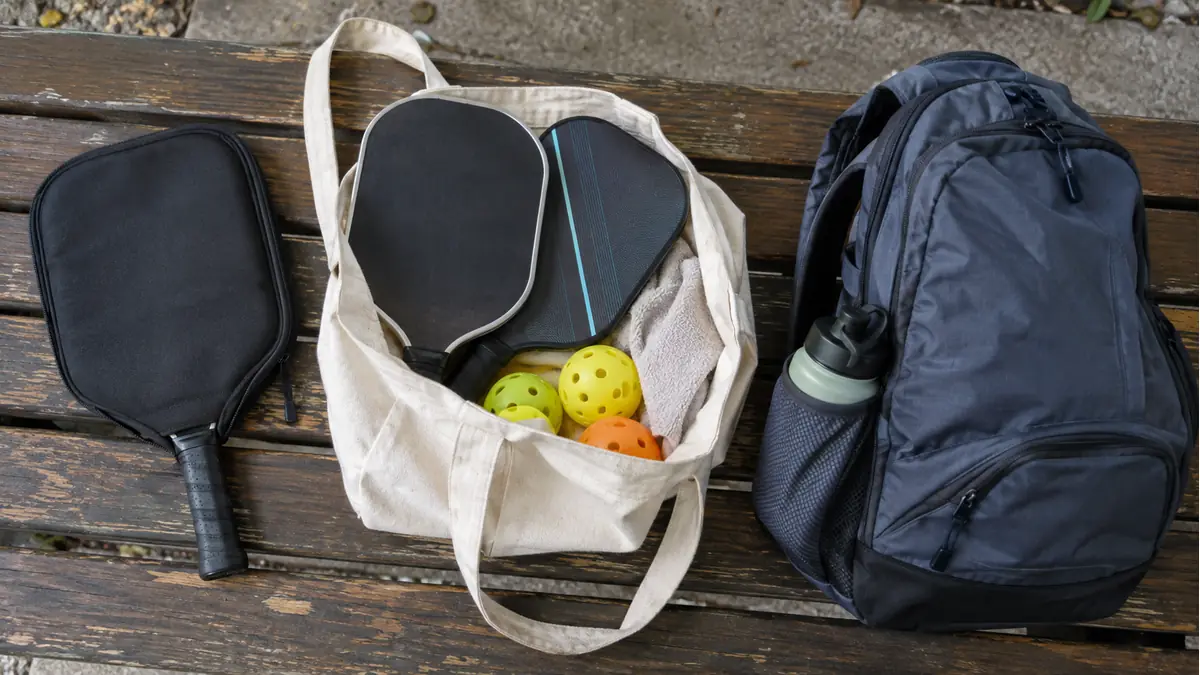
For those who "want to quickly head to a nearby court," the tote type is just right. Its simple look that fits easily with your outfit is a quietly pleasing point too.
Its storage capacity is inferior to a backpack, but for those who find one to two paddles, a few balls, a wallet, and keys sufficient, it's just the right size.
Dedicated case type: specialized in protecting the paddle
A paddle case is an item completely specialized in protecting the paddle. It's often chosen by people who already have an everyday bag and want to "carry just the paddle safely."
There are two material types: hard case and soft case. A hard case is strong against impact but bulky. A soft case is light and compact, but has the downside of being hard to protect from strong impacts.
Five points for choosing without failing
Once you've decided on a type, next check the finer points. Overlook these and you tend to end up with "I bought it, but it's hard to use," so be careful.
① Choose by the number of paddles it holds
If you play alone, one to two is enough, but if you go with family or friends, a model that holds three to four is by far more convenient. Keep in the back of your mind the possibility that your paddles will increase in the future too.
② Whether there's a dedicated ball pocket
A mesh pocket or separate compartment that lets you store balls separately keeps the inside of the bag cleaner and makes taking them out easier. Since you often carry multiple balls including spares in pickleball, it's a surprisingly important point.
③ Material durability and waterproofing
For those whose main court is outdoors, be sure to check whether the material is waterproofed. It can protect the gear inside even in sudden rain. As a guideline, a thickness of600D polyester or moregives peace of mind.
④ Wet/dry separate storage
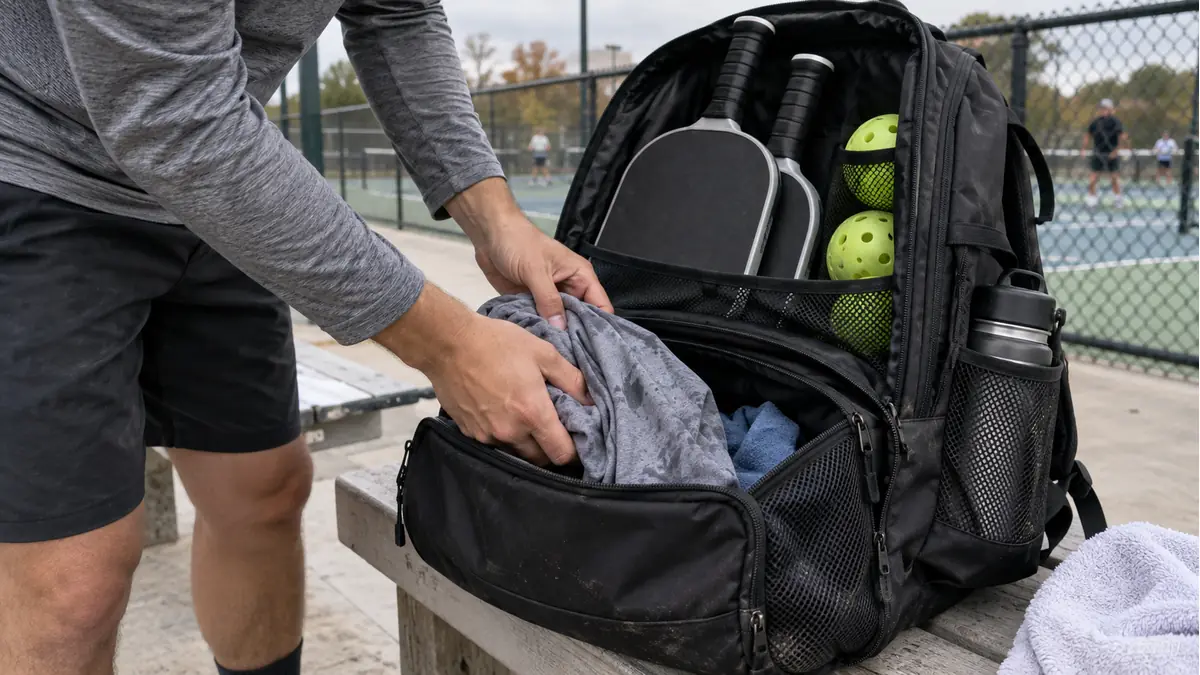
Choosing a model with a separate compartment that lets you store sweat-soaked wear and shoes separately makes post-play cleanup much easier. It's an easily overlooked feature, but whether it's there or not greatly changes the comfort.
⑤ Check the brand and sizing
As pickleball-dedicated brands, SELKIRK andFranklin Sports are famous overseas. Domestically, affordable Japanese- and Taiwanese-made models are increasing too, and searching "pickleball bag" on Amazon or Rakuten turns up a variety of options in the 3,000–10,000-yen range.
Recommended ways to choose for beginners, intermediates, and tournament participants
The points to prioritize change by level. Check which one you're closest to.
| Level | Recommended type | Budget guideline | Priority points |
|---|---|---|---|
| Beginner (once or twice a week) | Tote type or dedicated case | 2,000–5,000 yen | Value and lightness |
| Intermediate (three or more times a week) | Backpack type (mid-size) | 5,000–10,000 yen | Storage capacity and durability |
| Tournament participants | Backpack type (large capacity) | 8,000–15,000 yen | Multiple paddles, wet separation |
While you're a beginner, the smart choice is to first feel things out with a 2,000–3,000-yen tote type or dedicated case. At the point you've confirmed you're hooked on pickleball, step up to a more functional backpack type.
As you become an intermediate, participating in tournaments and traveling to multiple courts increase. Switching to a 5,000–10,000-yen-range backpack type at that timing raises the comfort of your play a notch.
Summary
Organizing the points for choosing a pickleball bag, it comes to this.
- Choosing a type is the first fork in the road: choose to match your style from the three types—backpack, tote, and dedicated case
- Beginners start with a tote or case: try one for 2,000–3,000 yen
- Intermediates and tournament participants go with the backpack type: prioritize storage capacity and durability
- Easily overlooked are the dedicated ball pocket and wet separation: whether these are there or not greatly changes usability
A single bag changes how you step toward the court. Find your favorite and enjoy pickleball even more!
FAQ
Q1: Does a pickleball paddle fit in a regular tennis bag?
A1: It fits in some cases, but many paddles are about 43 cm long and may not fit in a compact tennis bag. Using a dedicated paddle sleeve or choosing a bag clearly marked as pickleball-compatible gives peace of mind.
Q2: How many balls should the bag carry?
A2: A guideline is 6–8 for practice and 10–15 for matches. Choosing a model with a mesh pocket or a separate ball compartment makes them easy to take out and keeps the inside of the bag clean.
Q3: Is combining a regular backpack with a paddle case a valid option?
A3: Of course it's valid. In fact, it's a value-friendly method for beginners. A style of protecting just the paddle in a case and putting the rest of your gear in your usual backpack is practical.
Q4: Is waterproofing necessary?
A4: If your main court is outdoors, having waterproofing gives peace of mind. It can protect the gear inside even in sudden rain. If your main court is indoors, you don't have to fixate on waterproofing, but the material's thickness directly ties into durability, so check it.
Q5: What price range should I choose?
A5: For beginners, 2,000–5,000 yen; for intermediates, 5,000–15,000 yen is a realistic guideline. The higher the price range, the more storage capacity, durability, and waterproofing tend to increase, but it's good to decide first by comparing against your own play frequency.
Related Articles Worth Reading
- The Complete Guide to Pickleball Skill Ratings (2.0–5.0) | Know Your Level
- Are There Pickleball Tournaments Beginners Can Enter? How to Join and the Right Mindset
- Pickleball and Mental Health | Why It Works for Stress Relief and Preventing Depression
- A Stretching Routine Before and After Pickleball | Care to Enjoy It Injury-Free for Years
- Elbow Injuries Common in Pickleball | Preventing Tennis Elbow and Self-Care Methods
Reference Links
Related Articles