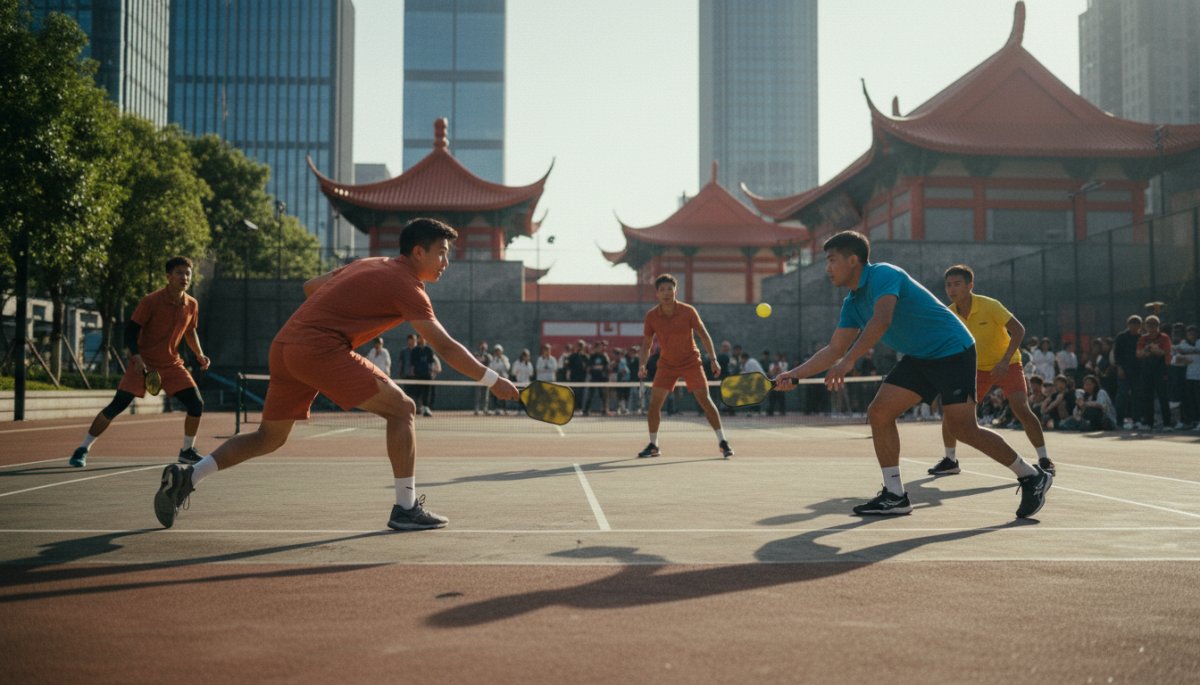
The wave of rapidly growing pickleball worldwide is surely reaching China, Asia's largest market.
In the United States the player base grew about 171.8% over three years to roughly 24.3 million in 2025, turning pickleball into a national sport. That momentum has crossed the Pacific, and in China - with its vast population and manufacturing capacity - it is spreading in its own way. This article sets out why pickleball is drawing attention in China, how far it has spread in major cities, the market data, the country's strength as a production base, the rising standard of play and the outlook ahead, using information current as of June 2026.
Why Pickleball Is Drawing Attention in China
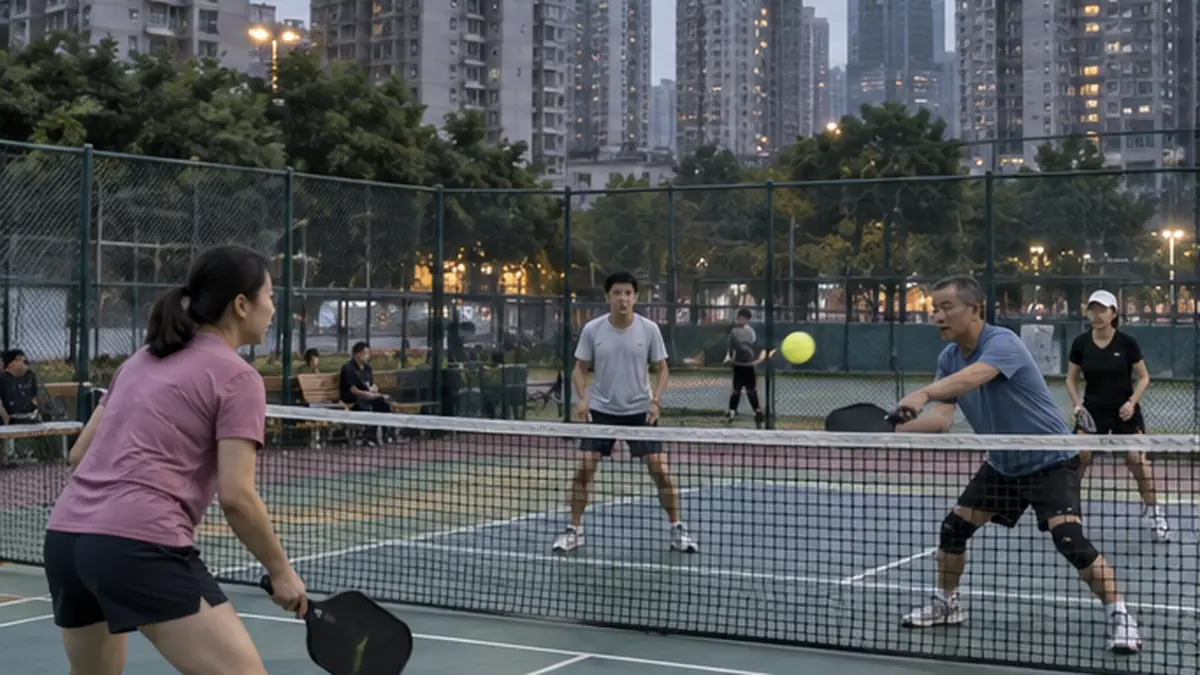
Pickleball's appeal in China lies in how easy it is to start.
On a court the same size as badminton, it does not require movement as intense as tennis, and you can also enjoy delicate technique like table tennis. This exquisite balance creates fertile ground for it to be accepted by a wide range of ages among Chinese people. Especially as the urban middle class expands, rising health consciousness and interest in new leisure activities are boosting its spread. The fact that badminton and tennis cultures are already rooted and there is familiarity with racket sports also smooths the transition to pickleball. The greatest feature of the Chinese market lies in its overwhelming scale and manufacturing capacity.
Adoption Status and Popularity Trends in Major Cities
Dedicated Facilities Spreading from First-Tier Cities
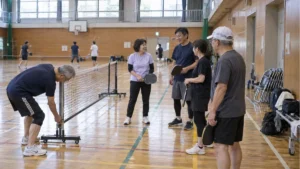
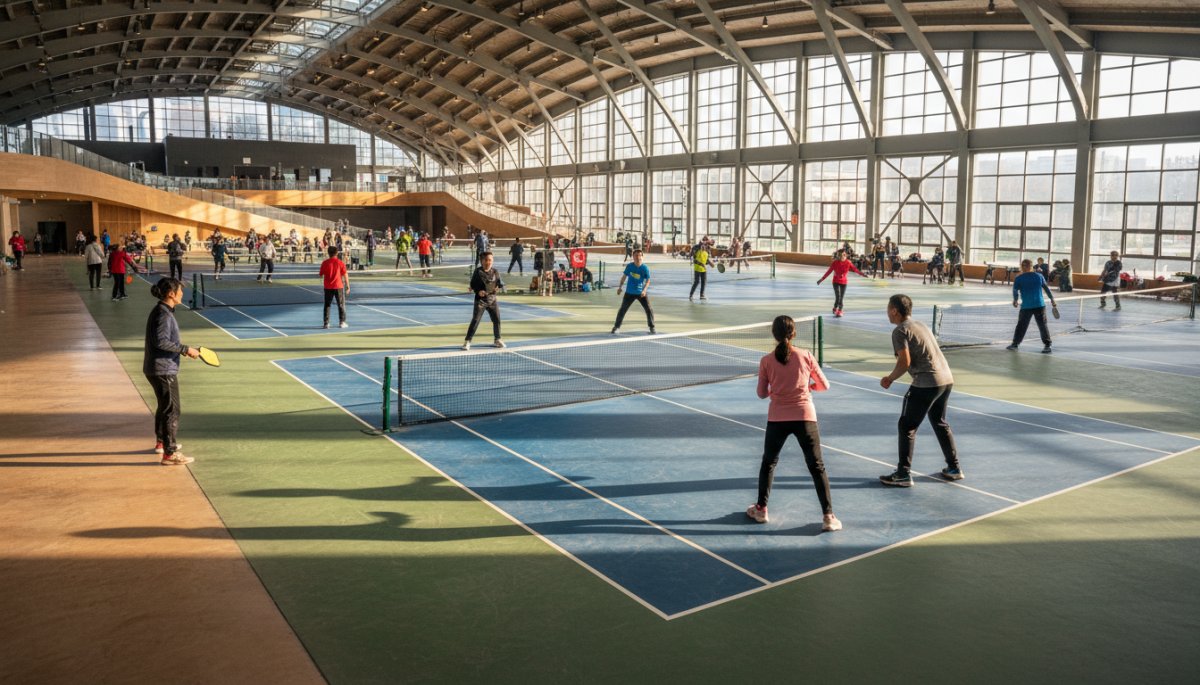
In first-tier cities such as Beijing and Shanghai, dedicated pickleball facilities keep appearing one after another.
There is active movement to convert existing badminton and tennis courts, and on weekends you can see many enthusiasts gathering. Adoption for corporate team building and program introduction at schools and universities also support its spread.
Spreading as a Social Sport
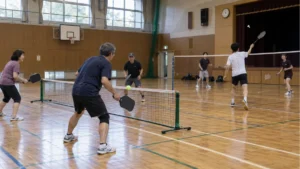
Worth noting is the social aspect of pickleball in China.
It has become a place for interaction across generations, and the fact that the whole family can enjoy it is highly valued. China's strong sense of community and family culture are factors accelerating its social adoption. Spread on SNS is also significant; on the short-video app Douyin (China's version of TikTok), views of pickleball-related videos have grown greatly, most of them concentrated after 2023. This tells the story of a boom happening in real time.
Source Created from People's Daily, "Pickleball, Which Anyone Can Play, Is a Big Hit"(June 2023)
Growth in Player Population and Market Data
China's pickleball market is showing steady expansion in numerical terms too. We have organized the main market data.
| Metric | Figure |
|---|---|
| China's Market Size (2021) | About 152.8 million dollars |
| China's Market Size (2028 projection) | About 256.1 million dollars |
| Global Equipment Market (2022) | About 197 million dollars |
| China's Equipment Production Share (2022) | About 19.2% (second in scale to North America) |
Equipment Market and Production Share
The growth of the equipment market is also striking; the global market is projected to expand from about 197 million dollars in 2022 to about 335 million dollars in 2029, at an average annual growth rate of 8.6%.
The Chinese market was about 37.9 million dollars as of 2022, accounting for about 19.2% of the world share, and is expected to reach about 60.5 million dollars in 2029. North America is currently the world's largest consumer market, but China plays an important role in production and is the leading region in production share after North America.
Source Created from Press Walker, "The Global Pickleball Equipment Market"(QYResearch survey)
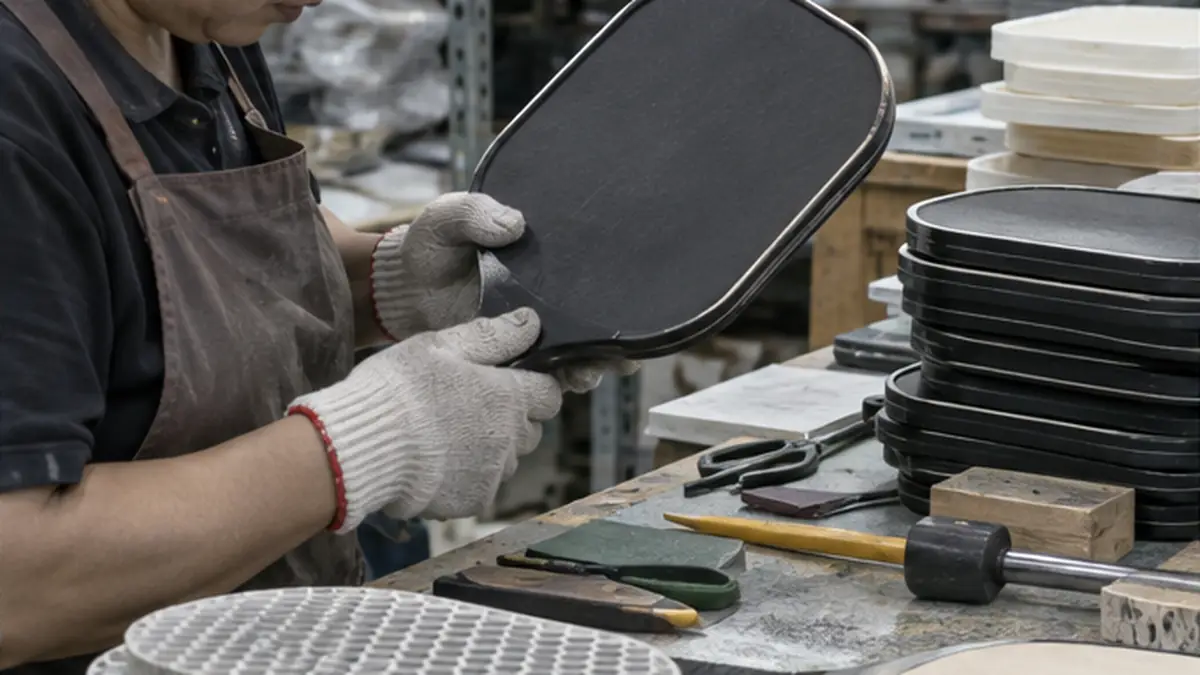
The Quality and Manufacturing Capacity of Chinese-Made Paddles
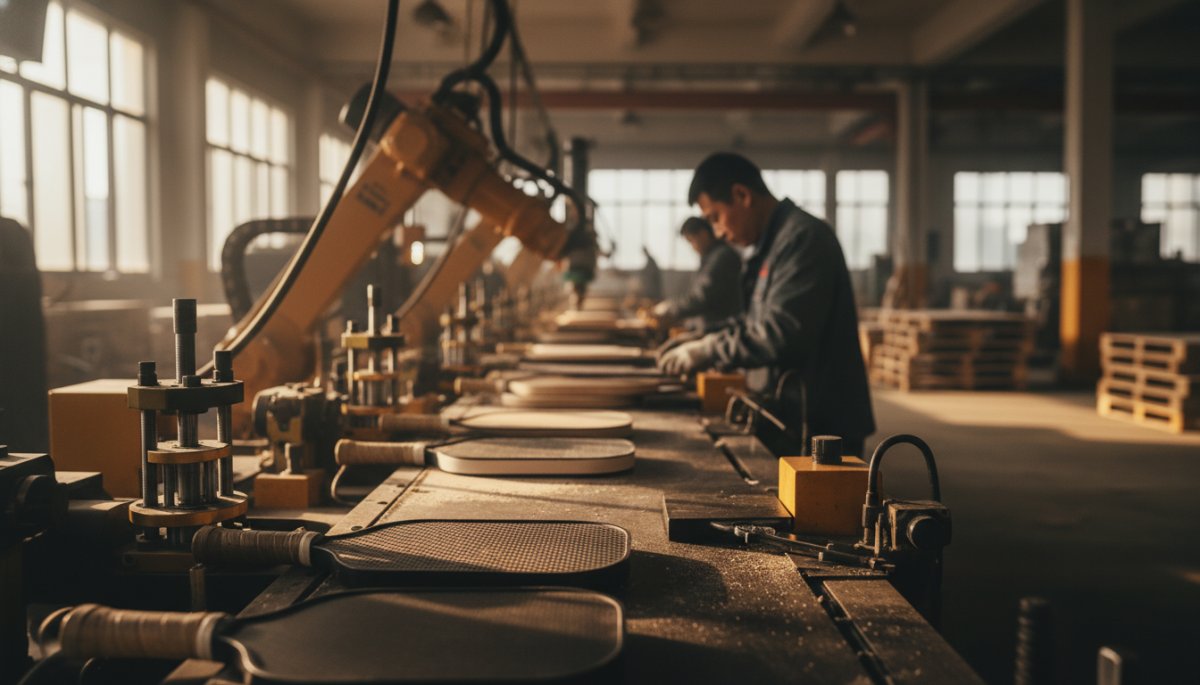
Emergence as the World's Manufacturing Base
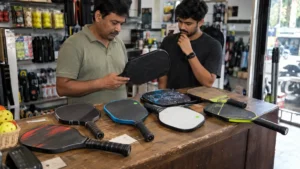
China is rapidly emerging as the world's manufacturing base for pickleball equipment.
Some products of many international brands (Selkirk、Paddletek、Engageand others) are already made in China, and the high level of its manufacturing technology is recognized internationally. This experience has also led to technical improvements among domestic Chinese brands.
Balancing Affordable Price and Performance
The feature of Chinese-made paddles is that they firmly secure basic performance while remaining in an affordable price range.
Models using a polymer honeycomb core and a fiberglass surface are mainstream, offering performance suited to beginners and intermediate players. Combining the economies of scale and technical skill cultivated over many years as a sporting goods producer, quality control systems are also coming into place. There are many products that are about 20–30% cheaper than international brands yet do not fall short in performance, winning support for their high cost performance.
Participation in International Tournaments and Improvement in Competitive Level
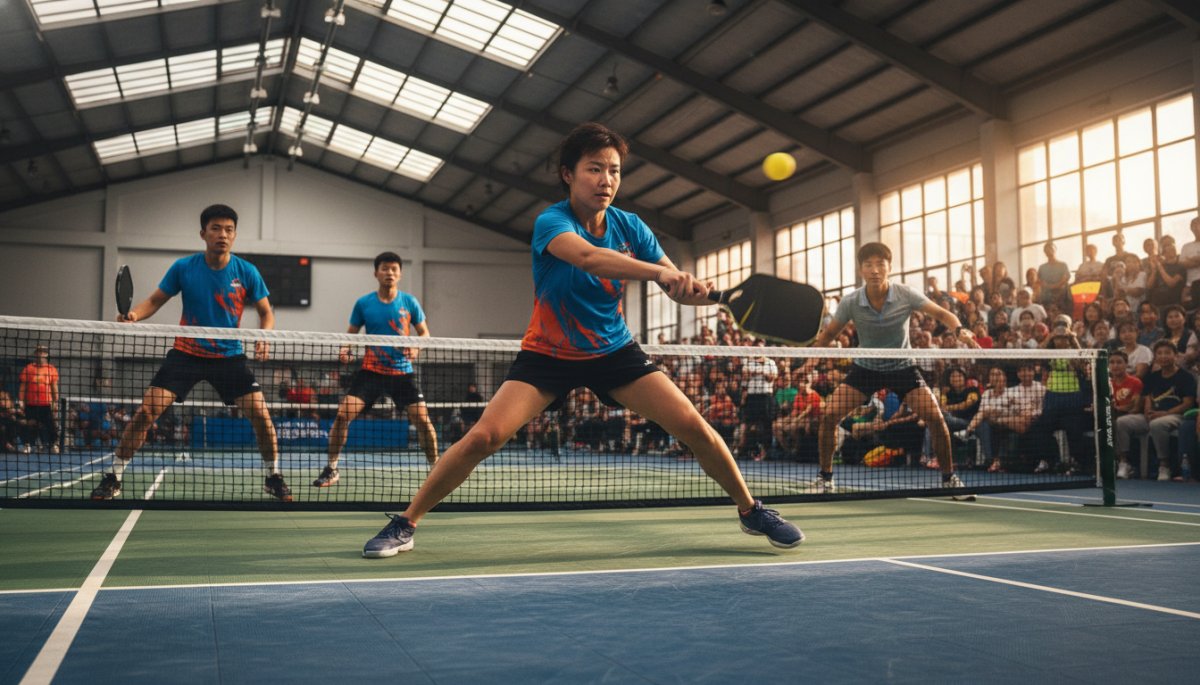
China's pickleball competitive level is steadily improving.
As a global governing body, the IPF (International Pickleball Federation) brings together many countries and regions, and China, as a member of Asia, is working on the sport's development. Domestically, regional tournaments have come to be held regularly, functioning not only as a means of technical improvement but also as a place for community formation. Interaction among participants is active, and the social appeal of making friends through matches is also valued.
Chinese players have begun to participate in tournaments in neighboring countries and the US, gaining international experience. Conversely, cases of international coaches and players visiting China to hold clinics and workshops are also increasing. Such international exchange is an important element in raising China's level.
China's Market Strengths and Challenges
The Chinese market has huge room for growth, but there are both tailwinds and headwinds. Let's organize them.
| Strengths | Challenge |
|---|---|
| A market of 1.4 billion people and an expanding middle class | Competition with existing sports such as badminton and table tennis |
| World-leading manufacturing capacity and price competitiveness | Infrastructure development such as dedicated courts is still to come |
| Rapid spread to younger people via SNS | Development and standardization of competition bodies and rules is in progress |
| Support for sports promotion by the government and local authorities | The key is taking root so the boom does not end as a passing fad |
Especially large is the fact that world-leading manufacturing capacity is linked to a huge domestic market. Being able to mass-produce affordable, well-performing equipment domestically boosts both the expansion of the player population and brand development. On the other hand, because national sports such as badminton and table tennis are already established, how to compete for limited leisure time and courts will be the key to taking root. The focus for the next few years is how well the explosive spread of awareness can be turned into a continuous player population.
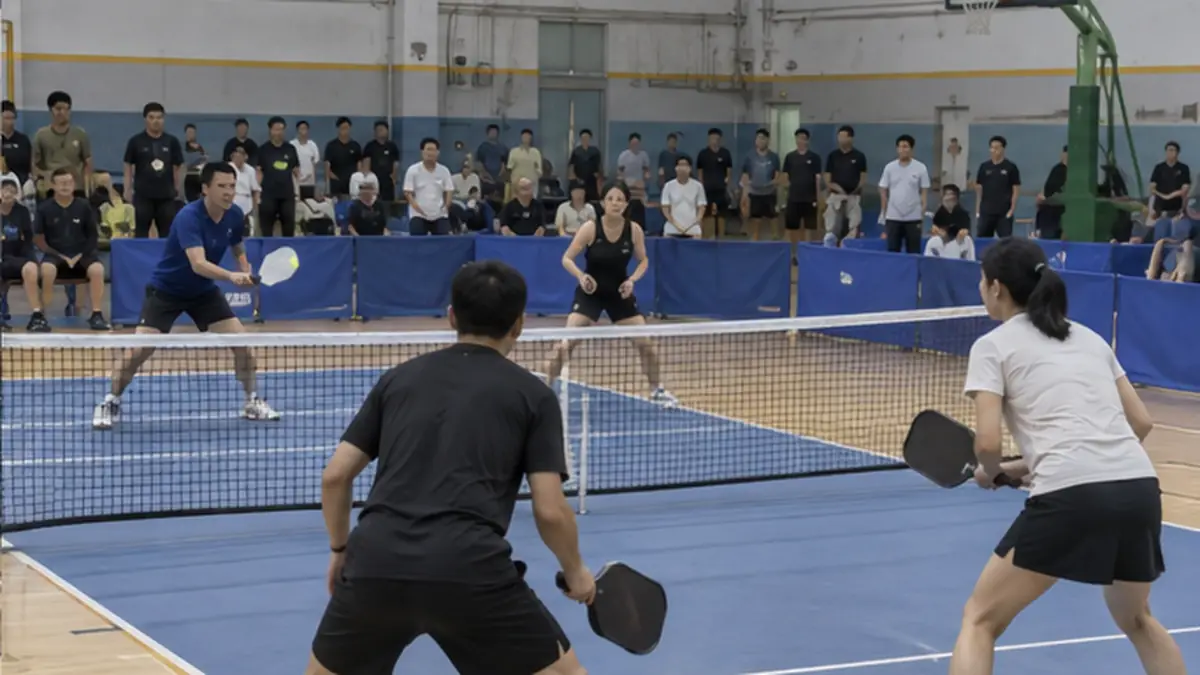
Future Market Expansion Projections and Development Potential
Government Support and Growth of Related Businesses
China's pickleball market is expected to grow further.
The government also supports the development of new sports as part of sports promotion, and cases of local authorities building courts in public spaces can be seen. Economically, related businesses such as court construction, equipment sales, coaching, and tournament operation are growing rapidly, creating new jobs as well. Some entrepreneurs have begun to develop new business models such as pickleball cafes and complex facilities.
The Apparel Market and Hopes for an Asian Hub
The apparel and shoe markets also continue to expand, and many sports brands are entering.
International brands such as Adidas and Fila have set up "pickleball" as an independent category, and the apparel and shoe market is expected to grow to about 680 million dollars in 2026. In many regions of China, outdoor sports are possible year-round, and the development of indoor facilities is also progressing. In the future, it has the potential to become the pickleball hub of the Asia-Pacific region, and high-quality, affordable Chinese-made equipment is thought to further expand its share in the global market. The situations of Asian countries are explored inSouth KoreaandVietnamthe article as well.
Source Created from Global Information, "The Global Pickleball Apparel and Equipment Market"(2024)

The key to reading China is the duality of "consumer market" and "production base." The growth in player population is of course noteworthy, but the fact that many of the world's paddles are made in China cannot be overlooked. When the domestic boom links up with manufacturing power, affordable, high-quality equipment spreads worldwide, potentially moving the price market itself. For Japanese enthusiasts too, this is a matter that concerns their choice of equipment.
FAQ
How widespread is pickleball in China?
Dedicated facilities are increasing mainly in first-tier cities such as Beijing and Shanghai, and it is spreading rapidly to younger people via SNS. The market size is projected to expand from about 152.8 million dollars in 2021 to about 256.1 million dollars in 2028, and it is in a transition stage from its dawn to a period of growth.
Why is China important as a pickleball manufacturing base?
Because it has manufacturing capacity and price competitiveness cultivated over many years as a sporting goods producer. Some products of international brands such as Selkirk, Paddletek, and Engage are also made in China, and it accounts for about 19.2% of the world's equipment production share—second in scale to North America.
Are Chinese-made paddles of good quality?
There are many models that firmly secure basic performance while remaining in an affordable price range, suited to beginners and intermediate players. A polymer honeycomb core and fiberglass surface are mainstream, and products that do not fall short in performance while being about 20–30% cheaper than international brands are increasing.
Will China's pickleball market keep growing?
It is expected to grow. Government sports promotion policies, court construction by local authorities, and the growth of related businesses are tailwinds. On the other hand, competition with badminton and table tennis, the development of dedicated courts, and the standardization of bodies and rules are challenges, and the focus is whether the boom can be turned into a continuous player population.
Summary: The Outlook for China's Pickleball Market
China's pickleball market is in a transition stage from its dawn to a period of growth.
Adoption centered on urban areas, establishment of its position as the world's manufacturing base, and improvement in international competitive level are progressing simultaneously, and a major leap is expected in the next few years. With the expansion of market size, growth in player population, and government sports promotion policies combined, China will become an important presence in the global pickleball market. Taking advantage of its manufacturing strengths in particular, its role in supplying high-quality, affordable equipment to the world is thought to expand further.
The moves of China, Asia's largest market, are relevant to Japanese enthusiasts as well through the price and distribution of equipment. We want to keep watching the growth of this huge market unfolding right nearby. For the spread worldwide, see theglobal boom articleplease also have a look.
Related Articles Worth Reading
- The Pickleball Scene in South Korea Explained | Its Fast-Growing Popularity and the Background to Its Spread
- Vietnam's pickleball expanding in Asia | The current state of its spread and its outlook
- The State of Pickleball in India | Potential in a 1.3-Billion-Person Market and Key Players
- The Pickleball Scene in Thailand | Spreading Fast in Southeast Asia, Plus the Resort Experience
- Pickleball's popularity spreading worldwide | The background of the boom and its growth drivers
Related Articles